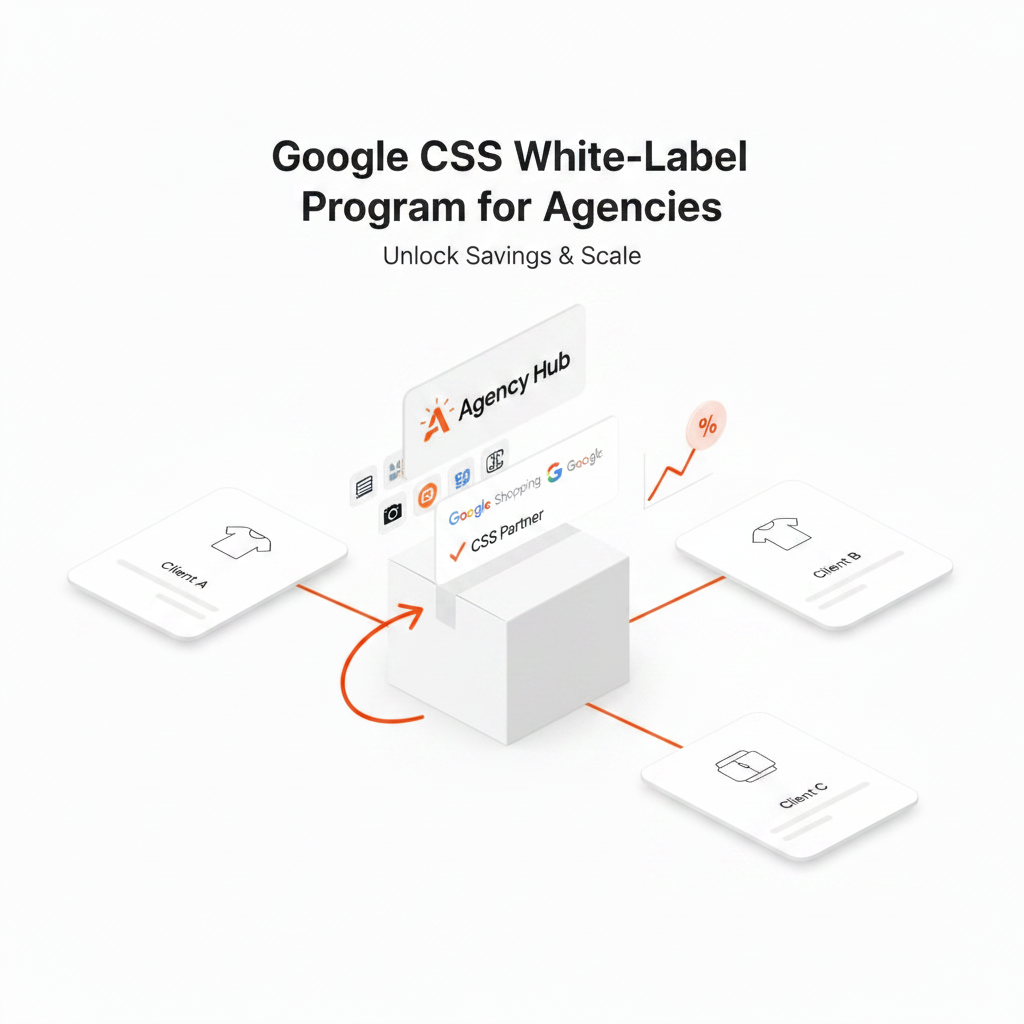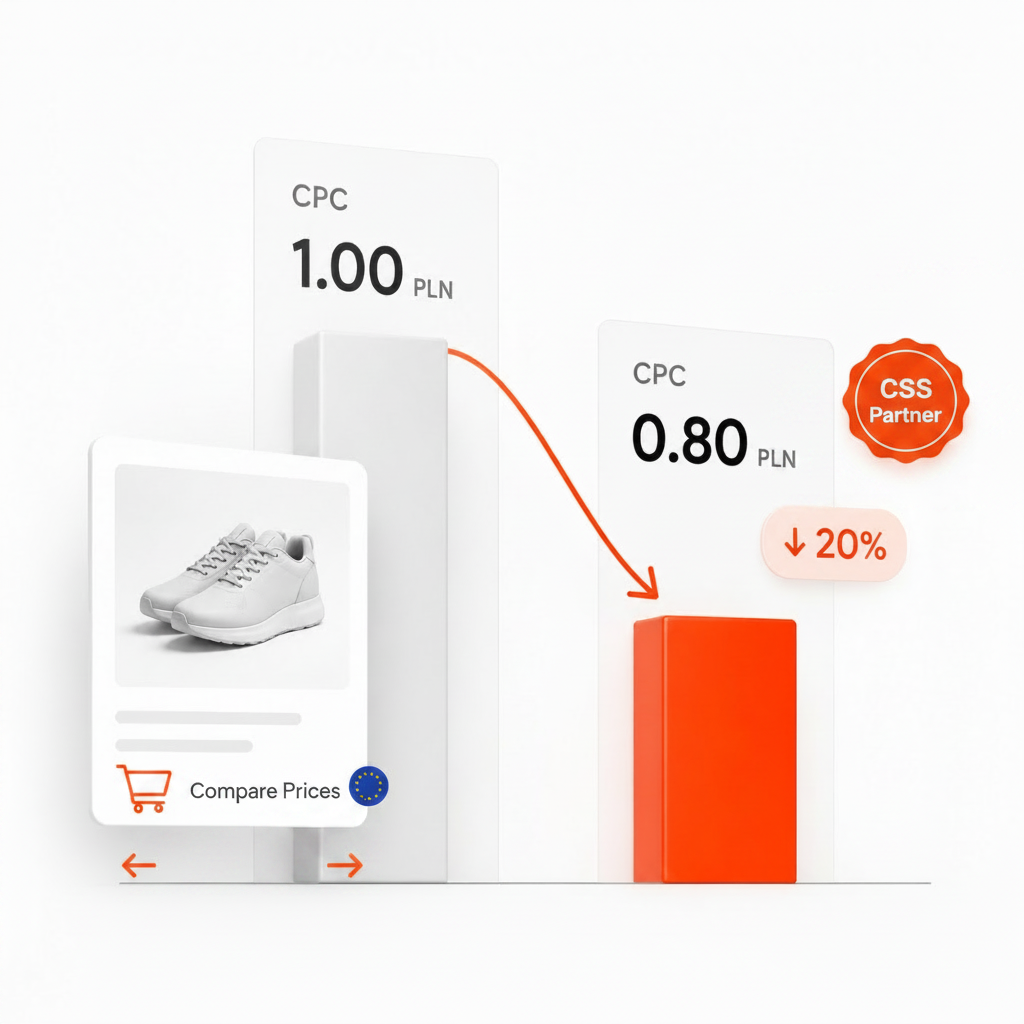
Short answer: Google Shopping Europe and independent CSS partners place the same Shopping ads, in the same auction, with the same tools. The main difference is cost. Google Shopping Europe deducts a margin from every bid, while an independent CSS charges for its service in a different way – which is why switching can lower Shopping CPCs by up to 20%.
Below we compare the two options point by point and explain when each makes sense. For a broader introduction, see What is Google CSS?
What is Google Shopping Europe?
In the 21 countries of Google's CSS program, Shopping ads have to be placed by a Comparison Shopping Service (CSS). Google Shopping is one of these services. In Europe it is commonly called Google Shopping Europe (GSE), and it is the CSS your Merchant Center account uses unless you choose another one.
Following the European Commission's 2017 decision, Google Shopping in Europe has to operate as a stand-alone business that covers its own costs. According to Google, it bids for the merchants it represents like any other CSS and deducts a fixed percentage margin from each merchant bid.
What is an independent CSS partner?
An independent CSS partner is a comparison shopping service other than Google Shopping that takes part in Google's CSS program. It places Shopping ads and free listings for the merchants it represents and competes with Google Shopping Europe in the same auction. Some CSSs manage campaigns for their merchants; others work in a self-service model, in which merchants keep running their own Google Ads campaigns.
Side-by-side comparison
| Aspect | Google Shopping Europe | Independent CSS partner |
|---|---|---|
| Who runs it | An independent company in Google's CSS program | |
| Margin on your bid | Fixed percentage deducted from each bid (widely estimated at about 20%) | No Google Shopping margin; the CSS charges its own fee |
| How you pay for the service | Built into the bid | Depends on the partner: flat fee, CPC markup or commission |
| Label on the ad | “By Google” | “By [CSS name]” |
| Auction and policies | Same auction, same Shopping ads policies | Same auction, same Shopping ads policies |
| Conversion reporting and automated bidding | Available | Available |
| Free listings in Europe | Can be selected | Can be selected (one CSS at a time) |
| How to start | Default option | Account switch: request, approval, effective within up to 14 days |
Where the cost difference comes from
When you bid €1.00 for a click through Google Shopping Europe, its margin is deducted before your bid competes in the auction. Google doesn't publish the exact percentage. It is widely estimated at around 20%, which would leave roughly €0.80 of your €1.00 bid competing. An independent CSS doesn't apply that deduction, so your full bid competes, and the partner's fee is charged separately.
In practice you can reach the same positions at a lower CPC, or win more auctions with the same budget. How big the effect is depends on your category, competition and bid strategy: “up to 20%” is a ceiling, not a guaranteed result. To estimate it for your store, use the CSS savings calculator.
Do the ads look different?
Hardly. Shopping ads from both options show the same product image, title, price and store name. The difference is the small link at the bottom: “By Google” for Google Shopping Europe, or the name of your CSS partner. According to Google, that link leads to the CSS's comparison site, and the CSS is currently not charged for clicks on it.
Can you use both at the same time?
Yes. A merchant can work with several CSSs, Google Shopping included. Google says a merchant is never second-priced against itself in the auction, so being represented by more than one CSS doesn't raise your own CPC, and the same offer isn't shown twice in one ad unit. Each CSS uses a separate Merchant Center account, though, and one Merchant Center account can be associated with only one CSS at a time.
When staying with Google Shopping Europe makes sense
- Very small Shopping budgets. If a partner's fee is larger than the saving, switching doesn't pay off. For example, with a €20 monthly fee and a saving of 10% of spend, you need more than €200 a month in Shopping spend in the program countries to come out ahead.
- Markets outside the program. If you advertise mainly outside the 21 program countries, there is no CSS price advantage to gain there.
- Surfaces your CSS doesn't cover. By default a CSS places products only in the Shopping unit on Google Search. If you depend on other surfaces, such as dynamic remarketing, choose a CSS that is opted in to them – or stay where you are.
When a CSS partner makes sense
- You spend a meaningful budget on Shopping or Performance Max campaigns in one or more of the 21 program countries.
- You want lower CPCs or more clicks without rebuilding campaigns or feeds.
- You run an agency and want to offer CSS to clients under your own brand – see white label CSS.
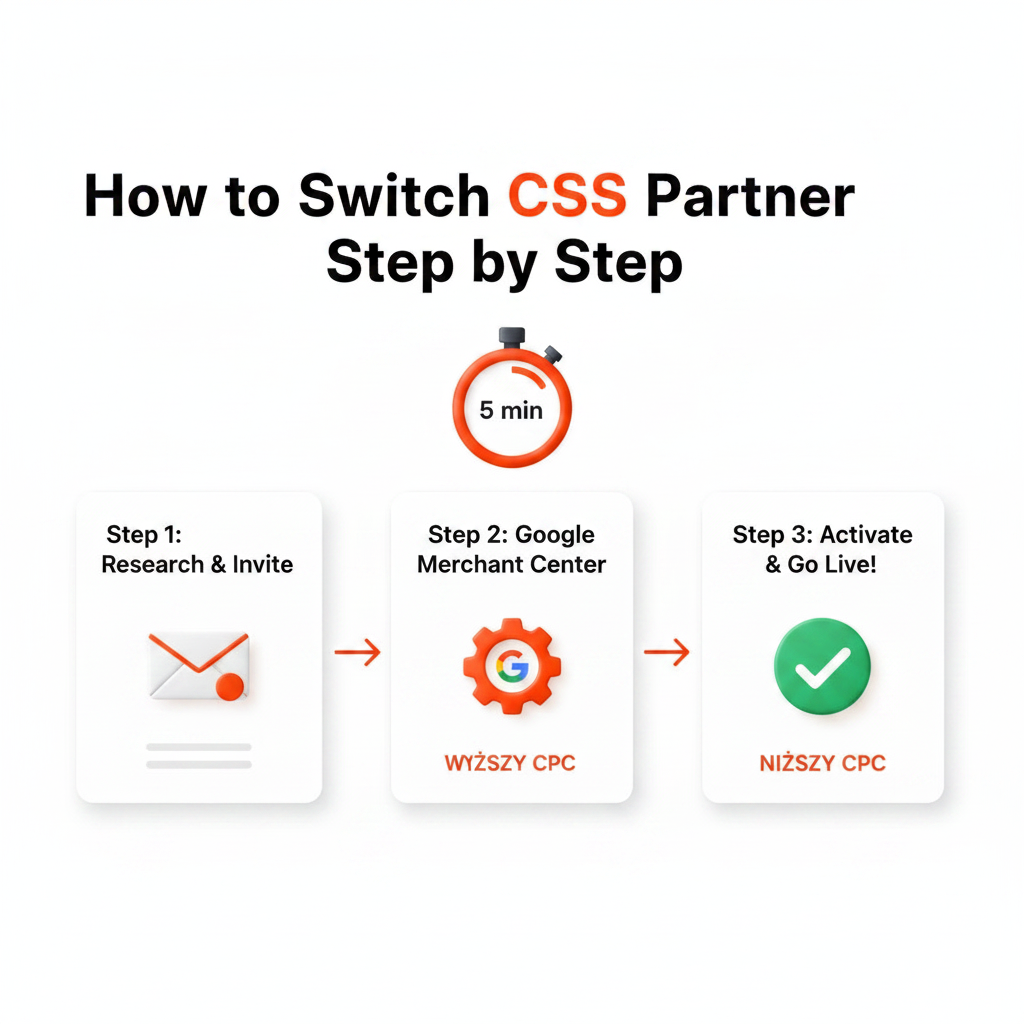
Before deciding, compare partners' pricing models and coverage. How the move works in practice is described in How to switch CSS partner in Google Merchant Center.
Frequently asked questions
Is Google Shopping Europe the same as Google Shopping?
Yes. It is the name commonly used for Google Shopping acting as a CSS in the European program countries.
Do CSS partners get worse placements than Google Shopping?
No. All CSSs compete in the same auction under the same rules, and no CSS has reserved ad space.
Will I lose features like Smart Bidding?
No. According to Google, all CSSs have access to the same features, including conversion reporting and automated bidding.
How much does a CSS partner cost?
It depends on the partner: some charge a flat monthly fee, others a CPC markup or a commission. Feedve charges a flat monthly fee with no commission on ad spend – see pricing or how Feedve works as a Google CSS partner.
Sources
- Google Merchant Center Help – About advertising with Comparison Shopping Services
- Google Merchant Center Help – Working with Comparison Shopping Services
- Google CSS Center Help – Switch merchant accounts between Comparison Shopping Services
- European Commission decision of 27 June 2017, case AT.39740 Google Search (Shopping).