To place Shopping ads for merchants in the 21 countries of Google's CSS program, a company must itself be a Comparison Shopping Service (CSS) that meets Google's program requirements: a working price comparison site with products from at least 50 distinct merchant domains in every country it serves, a business registration in a CSS country, verified details in CSS Center and a separate Merchant Center account for every merchant. New CSSs then go through an onboarding of about 60 days. This guide sums up those requirements, based on Google's own help pages, and explains when it is faster to work with an existing CSS partner or run a white label CSS instead.
What a "Google CSS partner" actually is
A CSS is a comparison shopping service that places Shopping ads on Google on behalf of merchants. In the CSS program countries, only CSSs can place Shopping ads and free product listings for merchants. Google Shopping (Google Shopping Europe) is one of them and bids for its merchants like any other CSS; independent CSSs are what people usually call "CSS partners".
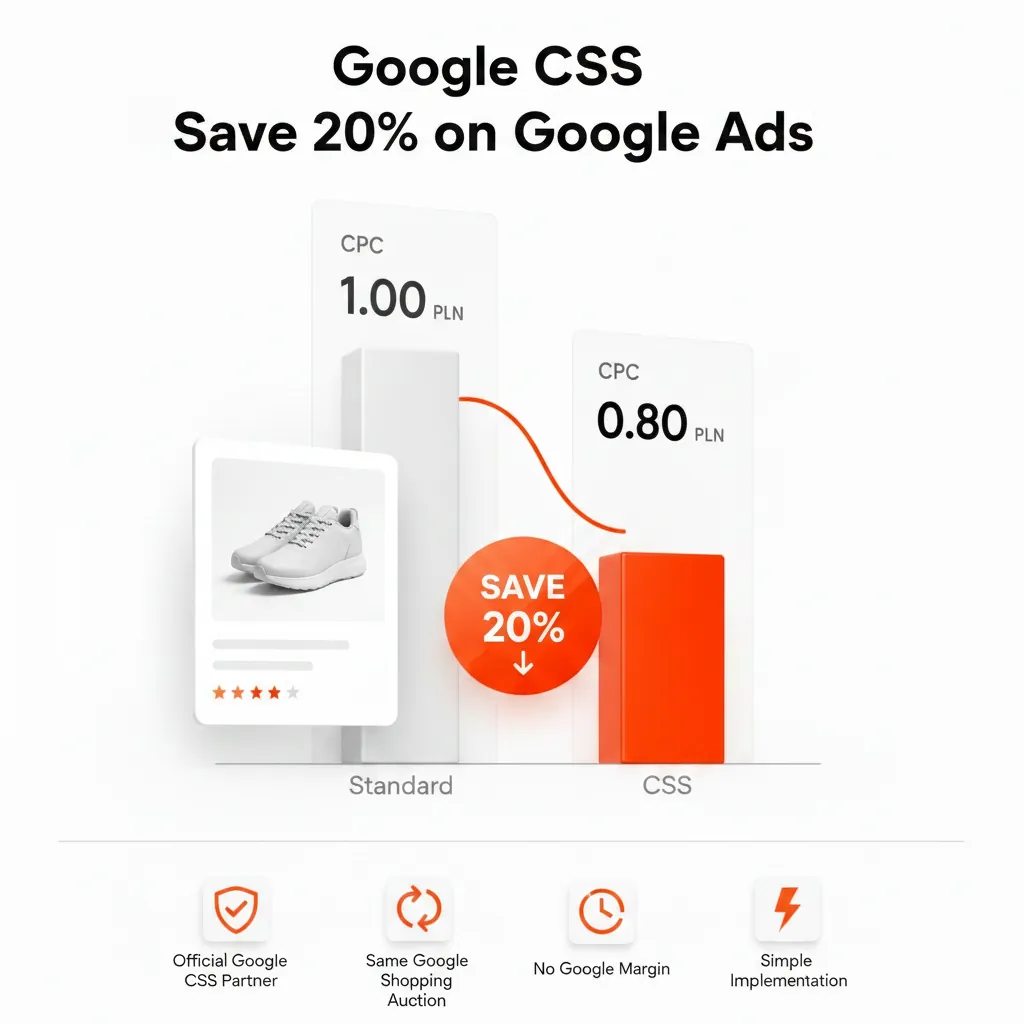
Every Shopping ad placed through a CSS shows a "By" link with the CSS name, and the CSS pays Google for the clicks on the ads it places. Google Shopping deducts a fixed percentage margin from each merchant bid before it enters the auction; independent CSSs set their own fees. That is why a merchant can pay up to 20% less per click through an independent CSS (the actual difference depends on category and competition). If you are new to the topic, start with What is Google CSS?
Google's CSS program requirements
Google lists the requirements in CSS Center Help. In short:
The comparison site
- Users can search and compare different products.
- The site shows products from at least 50 distinct merchant domains for every country the CSS wants to serve.
- Product results lead users to a page where they can buy the product.
- Search is mainly based on a dynamic, automated process, and results can be sorted or filtered by price.
- The site is accessible to everyone, without sign-up.
- A filter that limits results to fewer than 3 merchants for most queries is not allowed.
The business and CSS Center
- The business must be registered in at least one country where the CSS program is available, and its registered address must be shown on the site.
- The CSS site and the CSS Center account must have contact information and verified business information, including a physical address and a verified phone number.
- Product data for each merchant the CSS represents goes into a separate Merchant Center account.
Marketplaces
A business that is primarily a marketplace allowing transactions on its own domain cannot take part as a CSS. It can still advertise as a marketplace through one or more CSSs.
Onboarding: how a new CSS goes live
Meeting the requirements is only the start. Google describes two onboarding phases for new CSSs:
- Technical integration. The CSS tests its integration with a subset of its inventory: up to 1 million offers and up to 100 sub-accounts or merchants. Google recommends creating at least 10–15 Merchant Center accounts for testing.
- Scale. Once Merchant Center accounts are created, products uploaded and at least one Google Ads account linked, the CSS states how many offers it plans to upload so Google can reserve capacity. Onboarding is completed after 60 days.
After onboarding, inventory has to perform: Google expects a click-to-products ratio of at least 1:40 over a 28-day period – at least one click for every 40 submitted products. A CSS that falls below it can't upload more products and has to reduce its inventory.
Build your own CSS, join an existing one or go white label?
| Option | Who meets Google's requirements | Best for |
|---|---|---|
| Build your own CSS | You: comparison site, 50+ merchant domains per country, CSS Center, onboarding, ongoing compliance | Companies that want to run a comparison shopping business |
| Use an existing CSS partner | The CSS partner | Merchants that simply want lower Shopping CPCs |
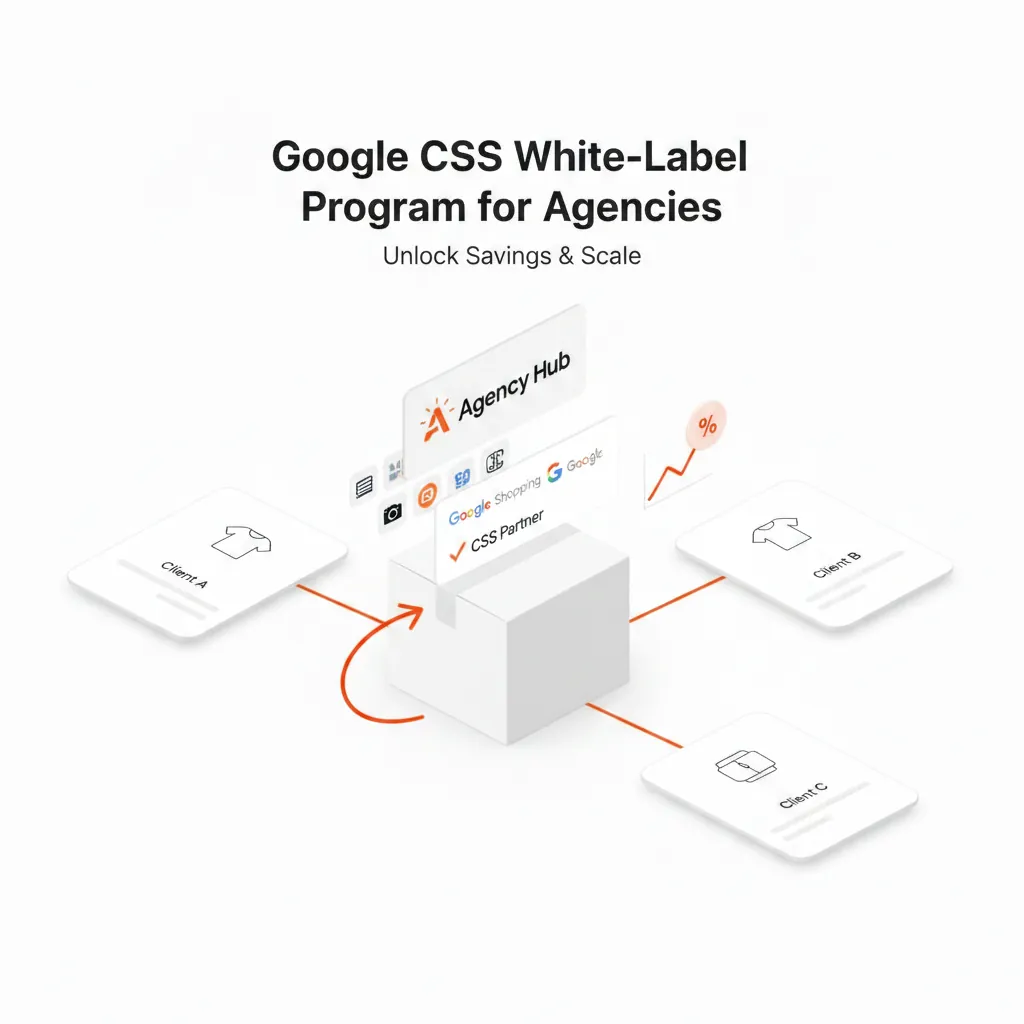
| White label CSS | The provider runs the CSS infrastructure; the agency sells it under its own brand | Agencies that want their own CSS brand without building one |
For most agencies, building a CSS from scratch means running a comparison site with enough merchants in every target country, passing onboarding and keeping the click ratio healthy – a separate business, not a side project. A white label CSS gives the agency its own name on clients' Shopping ads while the provider handles the CSS side. Feedve's White Label plan costs €199 per month or €1,990 per year with unlimited clients in all 21 countries. How the referral and white label models compare financially is covered in CSS affiliate vs white label.
Should a merchant use a CSS partner?
If you run Shopping ads in any of the 21 CSS countries, your ads already go through a CSS – by default Google Shopping. Moving to an independent CSS can lower your CPC by up to 20% for the same auction, while you keep your Google Ads account, campaigns and feed. Google's help pages also note:
- A Merchant Center account can be associated with only one CSS at a time, but you can work with several CSSs through different Merchant Center accounts.
- The new CSS starts the switch, and an admin of the Merchant Center account approves or declines it. Google Ads accounts don't need to be switched.
- The switch takes effect after a grace period of up to 14 days.
Estimate the effect for your budget with the CSS savings calculator, see the step-by-step process in How to switch CSS partner in Google Merchant Center, and check the list of CSS countries. Feedve Pro for merchants costs €20 per month or €200 per year – see pricing.
Frequently asked questions
What are the Google CSS partner requirements?
A CSS needs a comparison site where users can search, compare and filter products by price without signing up, showing products from at least 50 distinct merchant domains per country; a business registration in a CSS country; verified contact and business details in CSS Center; and a separate Merchant Center account for each merchant. New CSSs then complete an onboarding of about 60 days.
Can an agency become a CSS partner?
Yes, if it meets the same requirements as any other CSS, including running a comparison site with products from 50+ merchant domains per country. Most agencies instead use a white label CSS, where a provider runs the CSS and the agency's brand appears on clients' ads.
What is a Premium CSS Partner?
"Premium" is a status some CSSs advertise. It is not one of the CSS program requirements listed in Google's CSS Center Help, so it says nothing about whether a CSS can place your ads. Feedve is an independent Google CSS partner and does not hold Premium status.
Can I use more than one CSS?
Yes, through different Merchant Center accounts. Each Merchant Center account can be associated with only one CSS at a time.
Does a merchant pay Google directly when using a CSS?
The merchant keeps paying for clicks in its own Google Ads account. The CSS pays Google for clicks on the ads it places; with Google Shopping the margin is included in the CPC the merchant pays.
Sources
- Google CSS Center Help – CSS program requirements
- Google CSS Center Help – Onboarding for new CSSs
- Google Merchant Center Help – Working with Comparison Shopping Services
- Google Merchant Center Help – About advertising with Comparison Shopping Services
- Google CSS Center Help – Switch merchant accounts between Comparison Shopping Services